Board Game Design
Today, Monte Carlo simulations and board games. The University of Houston presents this series about the machines that make our civilization run, and the people whose ingenuity created them.
______________________
Every board game is a small world governed by its own rules. But how do we know if a game works? Can a clever player find a strategy to win every time? Does one faction dominate before the game gets interesting? In the past, the only way to find out was to gather friends, play the game over and over, and tweak the rules until the game felt right. Today, game designers let computers play the game thousands or even millions of times before any humans do.
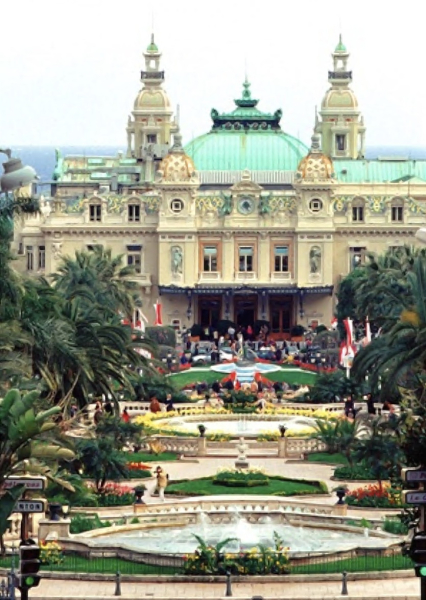
They use a technique called Monte Carlo simulation developed by physicists at Los Alamos in the 1940s. The approach takes its name from the Monte Carlo Casino in Monaco. The idea is simple: When a system is too complicated to analyze using paper and pencil, you let a computer simulate the possible outcomes at random. A game designer who wants to know whether the attacker or the defender wins more often in a dice contest writes a program that rolls virtual dice thousands of times, and counts the outcomes.
Designers have embraced the technique. Cole Wehrle designed the woodland war game Root using this approach. The game is famous for being radically asymmetric. Every player controls a faction with its own rules and pieces. For example, the Eyrie Dynasties are a rule-obeying regime of hawks, while the Woodland Alliance is a guerrilla insurgency rising from the shadows. To balance the game, Wehrle wrote computer programs that played through different situations, using the results to bend the odds and achieve the dramatic feeling he wanted. Hobbyists do the same, and chapters of game design textbooks are devoted to the Monte Carlo method.
But, as with most computer based approaches, there is a catch. A Monte Carlo simulation can only answer questions you can pose precisely. It tells you what happens as dice are rolled, and random sequences of cards drawn over and over again. But real players do not act randomly. They scheme, they bluff, and they hold a grudge. Most importantly, a simulation cannot tell whether a game is fun. So designers use Monte Carlo simulations to determine whether a game is balanced and fair and to check whether a strategy can be exploited easily. Then they still hand the game to their friends, who roll real dice, argue across a table, and decide whether the world the designer built is one they want to keep visiting.
In a way, this is a new chapter in an old story. Classic games such as go, chess, and backgammon were refined through countless plays over centuries. Generations of players changed a move here, and tweaked a rule there. They kept the changes that made the game work better and discarded the rest. This resulted in the polished classics we love and play today. Computers can run such experiments at a scale no group of humans can match. But it is still us who ultimately decide whether a game is worth playing again.
This is Krešo Josić at the University of Houston where we are interested in the way inventive minds work.
(Theme music)
A practical introduction to Monte Carlo simulation as a board game design tool can be found in the design blog Boards and Barley, and in Toth Games' essay Using Monte Carlo simulation in game design. A textbook treatment appears in Chapter 31 of Zack Hiwiller's Players Making Decisions: Game Design Essentials and the Art of Understanding Your Players.
For Cole Wehrle's use of Python and home-built tooling to balance his games, see the article How Cole Wehrle Makes Games. Wehrle's design credits are listed on his Wikipedia entry.
On the academic side, the paper Monte-Carlo Simulation Balancing in Practice (2010) is a useful starting point. Researchers have also pushed the idea further, using simulation together with search to automatically design balanced board games.
On the origin of the name, see the Wikipedia entry on the Monte Carlo method, which traces it to Stanisław Ulam, John von Neumann and Nicholas Metropolis at Los Alamos, named after the casino in Monaco where Ulam's uncle would gamble. On Root's asymmetric factions — the Marquise de Cat, the Eyrie Dynasties, the Woodland Alliance and the Vagabond — see the Root entry on Wikipedia.
This Episode first aired May 12, 2026.